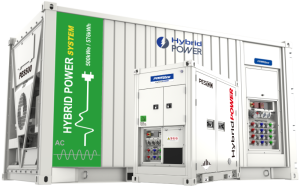
A comprehensive guide to air compressors
Date posted: 21st May 2024
Air compressors are an essential tool in many industries, from manufacturing to construction, providing the power needed for a variety of applications, but understanding how an air compressor works is crucial to maximising efficiency and productivity.
With that in mind, this guide will take an in-depth look at the inner workings of air compressors, as well as covering the different types available, key components of an air compressor, and practical applications.
Components of an air compressor system
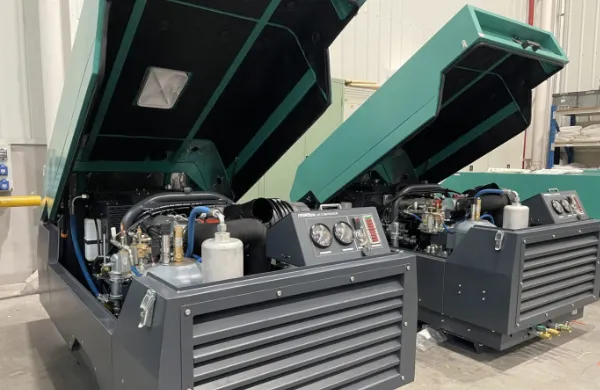
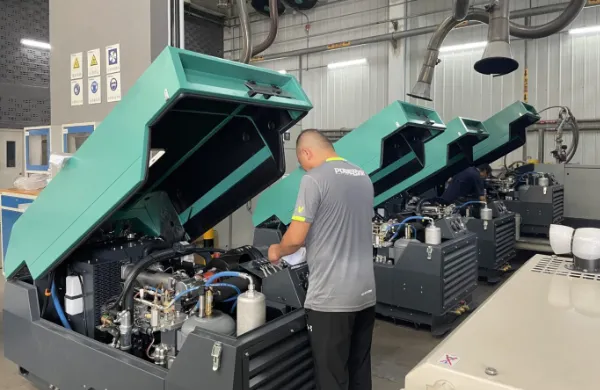
Before delving into the functionalities of air compressors, it is crucial to understand its various components. This foundational knowledge will not only facilitate proper operation but also enable effective troubleshooting during usage. Key elements of an air compressor encompass:
Tank: the compressed air is stored here and subsequently discharged through the outlet valve.
Pump: the pump functions to compress air and subsequently fills the tank.
Pressure switch: regulates the internal air pressure of the tank by automatically activating or deactivating the motor as required.
Motor: the motor drives the pump which compresses air into the tank, and also operates additional components of the air compressor, including the fan and gauge.
Pressure gauges: these display the pressure levels within the tank and at the outlet, enabling precise monitoring and adjustment.
How does an air compressor work?
- An electric motor or engine powers a pump, which draws air from the atmosphere through an intake valve
- A pump compresses the air and forces it into a storage tank where it is pressurised
- When the pressure inside the tank reaches a certain level, the pressure switch automatically turns off the compressor to prevent over-pressure.
- The compressed air in the tank can be used to power tools and equipment, inflate tires, or perform a variety of other tasks
- When the air in the tank runs out, the compressor will restart to replenish more compressed air into the tank
Types of air compressor
There are many types of air compressors, each suitable for specific tasks:
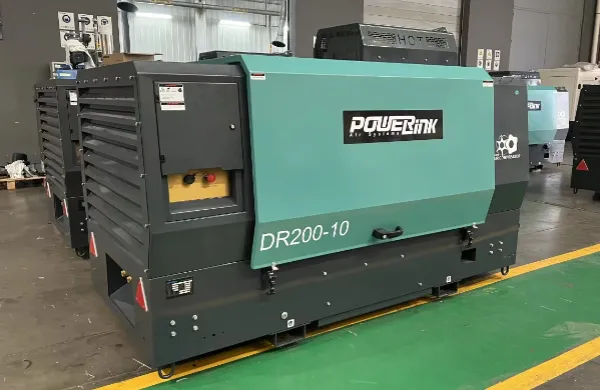
Portable air compressor: compact and mobile, ideal for home use or mobile operations such as roadside tire inflation.
Electric air compressor: uses an electric motor to drive the compressor, which is quiet and generally requires less maintenance. They are ideal for indoor operations.
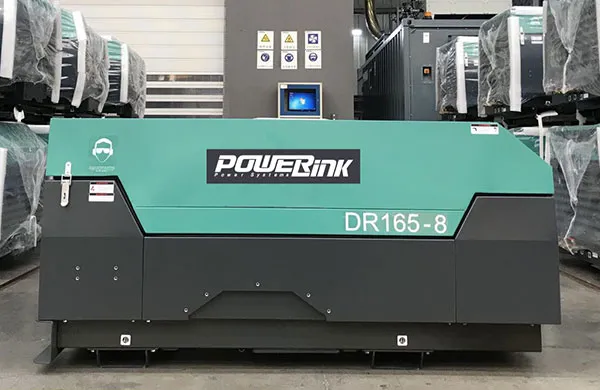
Industrial air compressor: used in factories and industrial environments, these units can deliver high power for large-scale applications.
Gas air compressor: these machines are powered by gasoline and are generally very rugged, making them ideal for projects where electricity may not be readily available.
The mechanical principles of an air compressor
An air compressor functions by drawing air into a chamber and subsequently compressing it, after which the pressurised air is then channeled through an outlet in the tank, accumulating pressure. This mechanism can be likened to releasing air from an inflated balloon, the compressed air, upon release, is harnessed as energy.
They operate using engines that transform electrical energy into kinetic energy, which is akin to that of an internal combustion engine, employing components such as a crankshaft, pistons, valves, cylinder heads, and connecting rods to facilitate this conversion.
Compressed air serves as a versatile resource, capable of powering an array of tools, with the popular choices being nail guns, impact wrenches, sanders, and paint sprayers.
How does an air compressor regulator work?
The regulator is affixed to the outlet of the compressor reservoir and is equipped with an adjustable knob and a pressure gauge. Rotating the knob counterclockwise exerts pressure against the spring that constrains the valve, subsequently decreasing airflow to the regulator and lowering pressure. Conversely, turning the knob clockwise relaxes both spring and valve, facilitating an increased flow of high-pressure air through the output.
When the pressure needed to operate a tool is below the level present in the air tank, the regulator automatically modifies this pressure, and although a regulator is unable to increase the pressure beyond what is contained within the tank, it does guarantee that your tools receive steady airflow at the proper pressure.
The regulator is designed to cease the operation of the pump when it detects that a predetermined pressure threshold has been met, so the action may halt the piston’s movement mid-stroke, resulting in the accumulation of compressed air within the chamber.
The presence of this compressed air can exert excessive strain on the starting circuit, necessitating increased power for motor initiation. To mitigate this issue, a safety valve can be installed as an auxiliary component, which cam release any trapped air, thereby preserving the integrity and efficiency of the starting mechanism.
Common applications of air compressors
- Industrial: commonly used in industries for applications such as powering pneumatic tools, operating machinery, and controlling processes like spray painting and sandblasting.
- Construction: essential in the construction industry for powering tools like jackhammers, nail guns, and paint sprayers, but are also used for handling materials like concrete and sand
- Automotive: inflating tyres, operating pneumatic tools, and powering air suspension systems, and can be used in car wash facilities for cleaning and drying vehicles
- HVAC systems: used in heating, ventilation, and air conditioning (HVAC) systems for providing compressed air to equipment like pneumatic controls and valves
- Refrigeration: crucial to refrigeration systems by compressing refrigerant gases to create the cooling effect needed for appliances like refrigerators and air conditioners
- Aerospace: various applications including powering hydraulic systems, operating aircraft landing gears, and pressurising cabin air
- Medical: used in medical applications for powering respiratory equipment, operating dental tools, and providing compressed air for medical instruments
- Food and beverage industry: applications such as packaging, bottling, and conveying materials, while also being used for operating pneumatic machinery and equipment
- Cleaning: used to power air tools like blowguns and pressure washers across various sectors such as industrial facilities, automotive, shops, and commercial buildings
A versatile tool
A diverse array of pneumatic tools and machinery, including air drills, braking systems, and HVAC units, play a crucial role in enhancing safety, efficiency, and comfort in daily life. Globally, compressed air is instrumental in workshops for tasks such as applying paint and eliminating dust and debris.
A thorough comprehension of the mechanics behind air compressors is pivotal for optimising their performance and efficiency.

Vickers Building, Hurricane Close,
Sherburn in Elmet, Leeds, LS25 6PB, UK